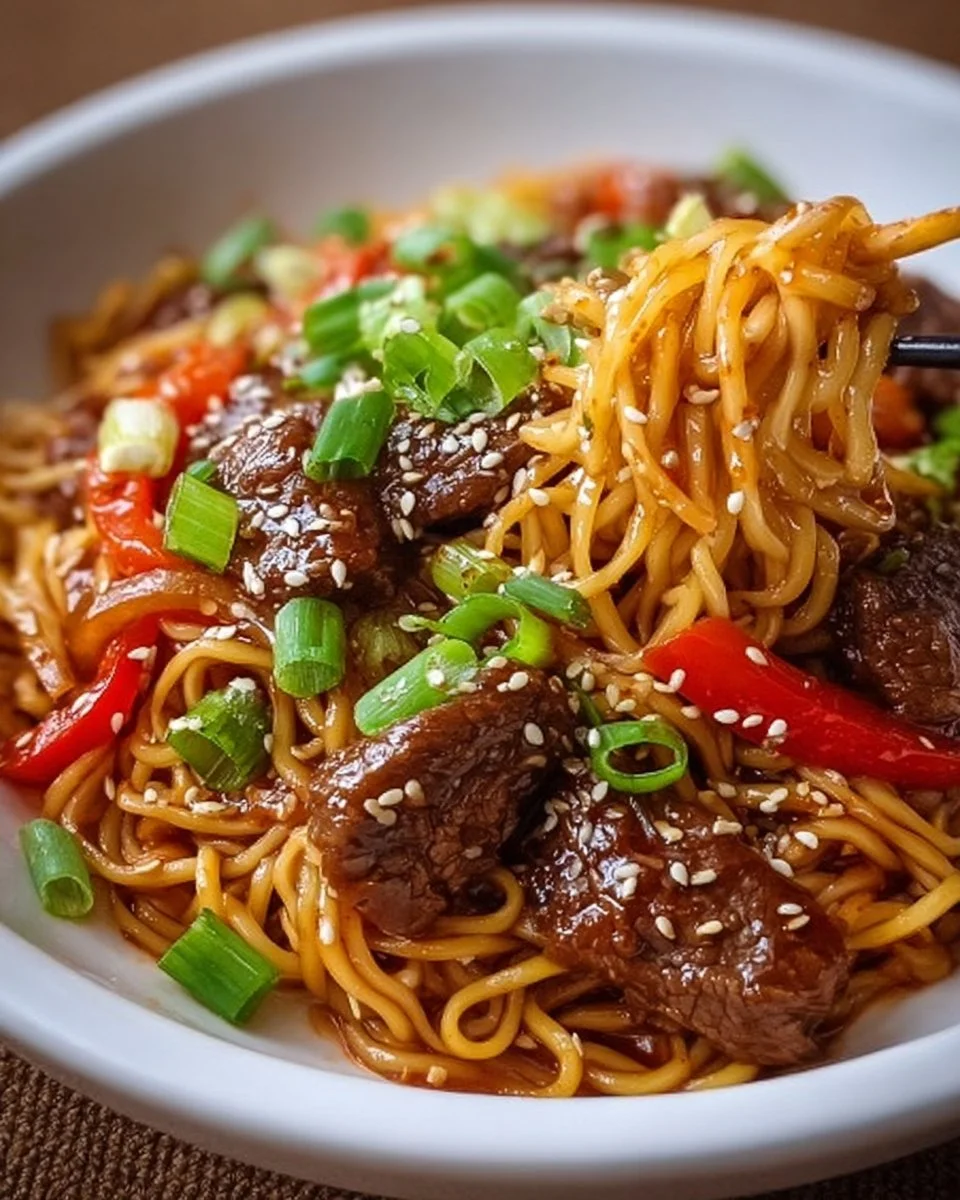
There’s an undeniable magic that happens in the kitchen when the fragrant aroma of Gochujang, a rich and spicy Korean chili paste, fills the air. Imagine as you slice into tender beef sirloin, preparing to transform it into a mouthwatering feast that dances with vibrant flavors. The dish soars beyond the boundaries of a typical noodle experience, beckoning food lovers into an immersive culinary adventure. With each bite, you imbue your palate with the delightful heat of the chili paste and the umami depth of soy sauce, creating a symphony of flavors that resonates with both warmth and excitement.
As the sizzling sounds of garlic and onions mingle, the anticipation grows. The colorful medley of red bell peppers and glistening noodles come alive in the skillet, their textures crisp yet tender. You watch as the sauce coats every ingredient, enveloping the entire dish in a glossy sheen that hints at the delightful richness to come. You can almost feel the inviting heat radiating from your stovetop, whetting your appetite for the feast ahead. Let each of these elements blend together, and you’ll find yourself utterly immersed in an experience that tantalizes not just the taste buds but the very soul.
Why You’ll Love This Spicy Korean Gochujang Beef Noodles
This recipe will quickly become a cherished favorite for many reasons. First and foremost, the vibrant flavors come together to create a dish that offers a rollercoaster ride of taste, blending the sweetness of brown sugar with the robust spiciness of Gochujang. You’ll find a satisfying balance between the tender beef, crunchy vegetables, and silky noodles that guarantees each forkful will leave you wanting more.
Perfect for a cozy weeknight dinner or a festive gathering with friends, this dish adapts brilliantly to any occasion. Simply serve it in a gorgeous bowl, and watch as your loved ones dive in, eyes lighting up with delight. The stunning colors and bold flavors transport you to the bustling streets of Seoul with every satisfying bite. You’ll appreciate how quickly this meal comes together, allowing you to prepare a wholesome feast without sacrificing precious time.
Preparation Phase & Tools to Use
Before diving into the culinary magic, gather your essential tools. Having the right equipment on hand not only streamlines the process but also enhances the overall cooking experience:
-
Skillet or Wok: A large skillet allows for even heat distribution, while a wok’s shape demands attention to stir-frying, ensuring all the flavors meld perfectly.
-
Knife Set: A sharp chef’s knife lets you cut the beef and veggies with ease, enhancing the texture and bite of each ingredient.
-
Cutting Board: A spacious cutting board provides enough room for prep work, keeping your kitchen chaos-free.
-
Mixing Bowl: This essential item makes marrying the sauce ingredients simple, setting the stage for great flavor.
Preparation Tips:
- Gather all ingredients before you start. This brings efficiency and avoids the chaos of hunting for mislaid items mid-cooking.
Ingredients for Spicy Korean Gochujang Beef Noodles
Fresh ingredients make all the difference, leading to a rich, satisfying dish. Here’s what you need:
-
1 pound beef sirloin, thinly sliced: Tender beef offers the perfect protein base. Substitute with chicken or tofu for a different spin.
-
1 tablespoon vegetable oil: This helps in sautéing without overwhelming the delicate flavors.
-
3 cloves garlic, minced: Garlic adds a fragrant depth that harmonizes beautifully with Gochujang.
-
1 onion, sliced: Sweet and aromatic, onions enrich the dish’s flavor layer.
-
1 red bell pepper, sliced: The bright red color isn’t just visually appealing, it introduces a crisp freshness.
-
1/4 cup soy sauce: This provides a savory umami foundation; low-sodium options work if you’re watching salt content.
-
2 tablespoons brown sugar: It balances the spiciness with a gentle sweetness.
-
2 tablespoons Gochujang (Korean chili paste): The star ingredient! It infuses every bite with heat and depth. Adjust for spice tolerance.
-
1 tablespoon sesame oil: This fragrant oil adds a nutty taste, enriching the overall profile.
-
1 tablespoon rice vinegar: Its tangy flavor brightens the dish.
-
8 ounces cooked noodles: Choose your favorite type, whether rice noodles, udon, or even soba for a unique twist.
-
Sesame seeds & sliced green onions for garnish: These add a final touch of elegance and texture.
How to Make Spicy Korean Gochujang Beef Noodles
Creating this flavorful dish is simpler than you might think! Follow these step-by-step instructions to achieve perfection:
-
Prep the Ingredients: Start by thinly slicing the beef sirloin. Mince the garlic and slice the onion and red bell pepper. Cook the noodles according to package instructions, then set aside.
-
Heat the Skillet: In a large skillet or wok, heat the vegetable oil over medium-high heat until shimmering.
-
Cook the Beef: Add the sliced beef sirloin to the skillet, cooking until it’s beautifully browned. Remove the beef from the skillet and set it aside to retain its tenderness.
-
Sauté Aromatics: In the same skillet, add the minced garlic and sliced onion. Sauté until the kitchen fills with their fragrant aroma and the onions become translucent.
-
Add Vegetables: Toss the red bell pepper into the mix, cooking for an additional 2-3 minutes until they soften slightly yet retain their lovely crunch.
-
Make the Sauce: In a small mixing bowl, whisk together the soy sauce, brown sugar, Gochujang, sesame oil, and rice vinegar. This sauce will be the glue holding all flavors together.
-
Combine & Coat: Pour this sauce mixture into the skillet, mixing well with the sautéed vegetables. Add the beef back into the skillet and toss to coat everything beautifully in the sauce’s embrace.
-
Noodle Integration: Add the cooked noodles, tossing everything to coat uniformly in that rich, spicy sauce.
-
Final Cook: Allow everything to heat through for an additional 2-3 minutes, ensuring the noodles soak in those amazing flavors.
-
Serve & Garnish: Remove from heat and serve hot, garnished with sesame seeds and sliced green onions.
Chef’s Notes & Helpful Tips
-
Make-Ahead Tips: Prep the sauce and slice the vegetables a day in advance to save time. You can also cook the noodles ahead of time; just store them in a bit of oil to prevent sticking.
-
Cooking Alternatives: Don’t have a skillet? An air fryer works wonders for cooking the beef quickly, and you can finish everything in a large pot, tossing the ingredients together.
-
Customization Ideas: Add extra veggies like broccoli or snap peas for more texture. Don’t hesitate to switch up proteins—chicken, shrimp, or even mixed mushrooms offer delightful variations.
Common Mistakes to Avoid
-
Overcrowding the Skillet: When adding the beef, avoid overcrowding. Working in batches gives a great sear and keeps the beef tender, rather than steaming it.
-
Skipping the Prep Work: Prepping all ingredients beforehand means you’ll streamline the cooking process. Poorly prepared meals can lead to uneven flavors.
-
Undercooking the Noodles: It’s essential to cook the noodles according to package instructions, ensuring they don’t turn mushy in the skillet.
What to Serve With Spicy Korean Gochujang Beef Noodles
You can elevate this dish by serving it alongside a variety of complementary sides:
-
Kimchi: The acidity and crunch of kimchi balance the richness, creating a beautiful contrast.
-
Korean-Style Cold Cucumber Salad: This refreshing salad cuts through the heat and enhances the meal’s flavors.
-
Steamed Broccoli: The vibrant green not only adds color but also complements the bold flavors nicely.
-
Rice: A fluffy side of jasmine or sticky rice offers a comforting and filling addition.
-
Pickled Radishes: Their tanginess refreshes your palate between bites.
-
Egg Drop Soup: A warm, comforting bowl provides a perfect companion to this spicy feast.
-
Sweet Potato Fries: Add a touch of sweetness that pairs beautifully with the dish’s heat.
Storage & Reheating Instructions
-
Refrigeration: Store leftovers in an airtight container for up to 3 days. Reheat gently in a skillet, adding a splash of water to prevent sticking.
-
Freezing: If you wish to freeze, do so before adding the noodles. The beef and vegetable mix can last up to 2 months. Thaw overnight in the fridge before reheating and adding freshly cooked noodles.
Estimated Nutrition Information
(Approximate values based on typical serving sizes—calories, fats, proteins, etc. may vary based on specific brands and measurements used.)
- Calories: 520 per serving
- Carbohydrates: 56g
- Proteins: 30g
- Fats: 20g
Nutritional values are estimates and can vary significantly based on ingredient choices and portion sizes.
FAQs
1. Can I use a different type of meat instead of beef?
Absolutely! Chicken, pork, or even shrimp work wonderfully. Just be sure to adjust cooking times based on the protein you choose.
2. Is Gochujang very spicy?
It carries a robust flavor with heat, but if you’re sensitive to spice, you can start with less and adjust to your preference. It also offers a pleasant depth that’s impossible to resist.
3. Can I make this dish vegetarian?
Yes! Replace the beef with tofu or tempeh and use vegetable broth instead of soy sauce for a delicious vegetarian version.
4. What if I can’t find Gochujang?
While substitutes exist, nothing quite captures its deep flavor. You can mix red pepper flakes with miso paste and a touch of sugar, but for the best results, seek out Gochujang at an Asian grocery store.
5. How can I make it gluten-free?
Use gluten-free soy sauce or tamari. Check the noodle packaging to ensure they’re also gluten-free.
Conclusion
The Spicy Korean Gochujang Beef Noodles bring together excitement, flavor, and simplicity—perfect for any dining occasion. Each bite delivers a story of rich taste, tender textures, and vibrant colors that you and your loved ones will savor. Whether enjoying it on a busy weeknight or as a centerpiece for a cozy gathering, this dish never fails to impress. So roll up your sleeves, embrace your inner chef, and let the warmth of Korean cooking warm your heart and home. You won’t just satisfy your hunger; you’ll create unforgettable memories around the dinner table. Enjoy every tasty bite!
Print
Spicy Korean Gochujang Beef Noodles
- Prep Time: 15 minutes
- Cook Time: 20 minutes
- Total Time: 35 minutes
- Yield: 4 servings 1x
- Category: Main Course
- Method: Stir-frying
- Cuisine: Korean
- Diet: Gluten-Free, Dairy-Free
Description
A flavorful dish combining tender beef, vibrant vegetables, and silky noodles, coated in a rich and spicy Gochujang sauce. Perfect for any occasion!
Ingredients
- 1 pound beef sirloin, thinly sliced
- 1 tablespoon vegetable oil
- 3 cloves garlic, minced
- 1 onion, sliced
- 1 red bell pepper, sliced
- 1/4 cup soy sauce
- 2 tablespoons brown sugar
- 2 tablespoons Gochujang (Korean chili paste)
- 1 tablespoon sesame oil
- 1 tablespoon rice vinegar
- 8 ounces cooked noodles
- Sesame seeds & sliced green onions for garnish
Instructions
- Prep the Ingredients: Thinly slice the beef sirloin, mince the garlic, and slice the onion and red bell pepper. Cook the noodles according to package instructions, then set aside.
- Heat the Skillet: In a large skillet or wok, heat vegetable oil over medium-high heat until shimmering.
- Cook the Beef: Add sliced beef to the skillet and cook until browned. Remove the beef and set aside.
- Sauté Aromatics: In the same skillet, add minced garlic and sliced onion. Sauté until fragrant and onions are translucent.
- Add Vegetables: Add red bell pepper and cook for 2-3 minutes until softened yet crunchy.
- Make the Sauce: Whisk together soy sauce, brown sugar, Gochujang, sesame oil, and rice vinegar in a small mixing bowl.
- Combine & Coat: Pour the sauce into the skillet, mixing with the sautéed vegetables. Add beef back in and toss to coat.
- Noodle Integration: Add cooked noodles, tossing to coat in the sauce.
- Final Cook: Heat everything through for another 2-3 minutes.
- Serve & Garnish: Serve hot, garnished with sesame seeds and green onions.
Notes
You can use chicken or tofu instead of beef. Prepare the sauce and chop vegetables in advance to save time. Adjust Gochujang based on spice preference.
Nutrition
- Serving Size: 1 serving
- Calories: 520
- Sugar: 10g
- Sodium: 800mg
- Fat: 20g
- Saturated Fat: 4g
- Unsaturated Fat: 14g
- Trans Fat: 0g
- Carbohydrates: 56g
- Fiber: 4g
- Protein: 30g
- Cholesterol: 70mg