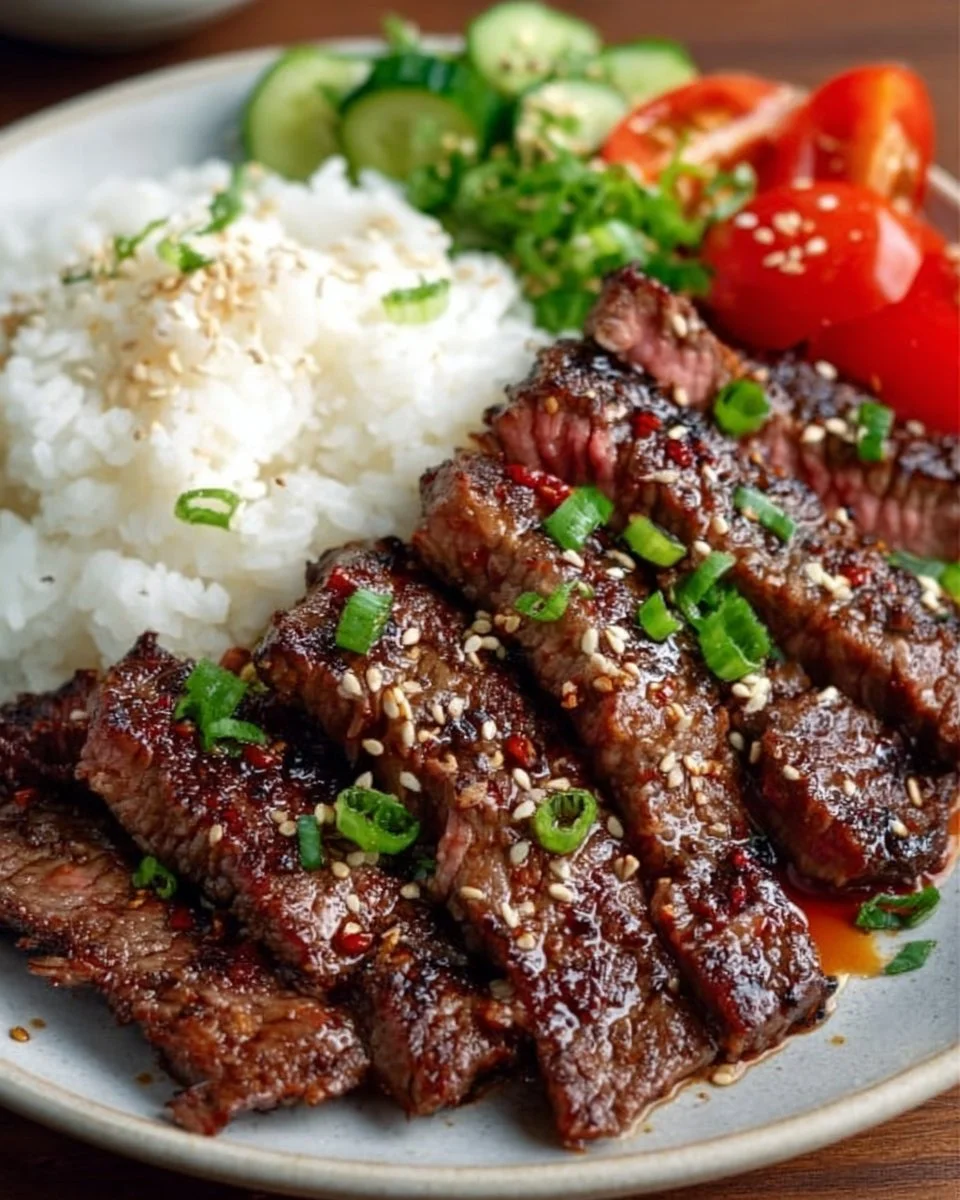
The tantalizing aroma of sizzling beef dances through the air, inviting you into a world where flavors converge in the most spectacular way. Imagine thin slices of juicy, marinated steak searing on a hot wok, their edges caramelizing and transforming into crispy morsels of heaven. Each bite bursts with an explosion of savory umami, the delightful spiciness of gochujang, and a hint of sweetness that lingers just long enough to tease your taste buds. Beef Yakiniku isn’t merely a dish; it’s a celebration—a beautiful blend of textures and flavors that transcends the ordinary dining experience.
As the steak cooks, it releases a mouthwatering steam that envelops the room, hinting at the deliciousness that awaits. The rich, mesmerizing brown surface of each piece invites you to dive in, promising a tender yet slightly chewy bite that feels luxurious against your palate. Together with a steaming bowl of rice and crisp, fresh vegetables, each moment spent savoring this meal feels like a cozy hug from your kitchen.
Why You’ll Love This Beef Yakiniku
Beef Yakiniku stands out not just for its incredible flavor but for the sheer joy of sharing it with others. Perfect for family gatherings, casual weeknight dinners, or lively parties, this dish brings friends and family together around the table. The combination of mouthwatering steak, aromatic marinade, and colorful accompaniments makes for an eye-catching and delectable experience that will impress your guests and leave them yearning for more.
Each ingredient plays a crucial role in delivering that satisfying taste. The steak, marinated to perfection, is complemented by a sweet and spicy sauce that tantalizes the senses. The freshness of chopped cucumbers and tomatoes adds a bright contrast that balances the richness of the beef. With minimal preparation time and the ability to customize according to your preferences, this recipe is a go-to for any home cook looking to create something special without excessive effort.
Preparation Phase & Tools to Use
Before immersing yourself in the delightful process of crafting Beef Yakiniku, gather your essential kitchen tools. Each one plays a vital role in achieving delicious results.
- Sharp Knife: A must-have for achieving those razor-thin slices of beef. The more precise your cuts, the better the meat absorbs the marinade.
- Mixing Bowl: An ample space for combining your marinade ingredients and ensuring every slice of steak gets coated.
- Wok or Heavy Skillet: Ideal for high-heat cooking, a wok allows for a quick sear, enhancing the dish’s flavor and texture.
- Serving Bowl: Warming a serving bowl in the oven keeps the food hot while you finish cooking the remaining batch.
Preparation Tips: Make sure your beef is very thinly sliced against the grain for the most tender bites. Marinating for at least two hours allows the flavors to penetrate the meat, ensuring every bite bursts with taste.
Ingredients for Beef Yakiniku
- Steak: 750 g (1.65 lbs) flank or skirt steak, very thinly sliced against the grain.
- Marinade:
- 80 ml (⅓ cup) low-sodium light soy sauce
- ½ tbsp gochujang (Korean red chili paste)
- 1 tbsp mirin
- 2 tsp minced ginger
- ½ tsp garlic powder or 1 tsp garlic paste
- 1 tbsp sesame oil
- 1 tbsp neutral oil (e.g., avocado or rapeseed)
- 4 tbsp light brown sugar
- To Serve:
- Sesame seeds
- Boiled rice
- Chopped cucumber and tomato
Each ingredient contributes to the overall experience. The low-sodium soy sauce ensures a deep, savory flavor without overpowering saltiness. Gochujang lends a spicy kick balanced by the sweetness from the brown sugar and mirin. For alternatives, try using other cuts of beef like sirloin or rib eye, and feel free to adjust the seasoning to match your spice tolerance!
How to Make Beef Yakiniku
-
Prepare the Marinade: In a large mixing bowl, whisk together the soy sauce, gochujang, mirin, ginger, garlic powder, sesame oil, neutral oil, and brown sugar until well combined.
-
Marinate the Steak: Add the thinly sliced beef to the marinade. Mix thoroughly, ensuring every piece is well-coated. Cover the bowl and refrigerate for at least 2 hours—the longer, the better!
-
Preheat the Pan: As the meat marinates, warm a serving bowl in the oven to keep your first batch of cooked beef warm. Heat a wok over very high heat until smoking hot—this step is crucial for achieving that perfect sear!
-
Cook the Steak: Working in two batches, add half of the marinated beef to the hot wok and spread it out in a single layer. Let it sear undisturbed for about 3 minutes to caramelize and form a beautiful crust. Then stir and cook for another 2–3 minutes until browned and slightly crispy. Transfer to the warm bowl and repeat with the remaining beef.
-
Garnish and Serve: Sprinkle the finished beef with sesame seeds and serve immediately alongside bowls of hot boiled rice. A refreshing side of chopped cucumber and tomato lightens the meal beautifully.
Chef’s Notes & Helpful Tips
- Make-Ahead Tips: Prepare the marinade and allow the beef to marinate overnight for the most flavorful results.
- Cooking Alternatives: You can use an air fryer for a healthier option, where you can air-fry the marinated steak for about 12–15 minutes at a high temperature, shaking halfway through for even cooking. An oven broiler works too—just be mindful to keep an eye on it so it doesn’t dry out.
- Customization Ideas: Amp up the flavor by adding sliced scallions or a dash of lime juice. You could even toss in some veggies alongside the beef during cooking for a complete one-pan meal.
Common Mistakes to Avoid
Many home cooks falter when it comes to marinating time. Rushing the process or skimping on time means sacrificing flavor. Always give it plenty of time to soak up those rich ingredients. Another common error lies in cooking temperature—don’t proceed at medium heat! High heat is essential for achieving that desirable sear. Lastly, avoid crowding the pan; cooking in batches allows the magic of caramelization to occur.
What to Serve With Beef Yakiniku
- Steamed White Rice: A classic pairing that balances the bold flavors of the beef.
- Kimchi: This spicy fermented Korean dish adds a tangy crunch that brightens every bite.
- Pickled Vegetables: Their acidity complements the savory sweetness of the meat beautifully.
- Edamame: Light, salted, and slightly nutty, these are perfect as a light appetizer.
- Japanese Noodle Salad: A refreshing side loaded with crunchy veggies is an excellent contrast.
- Sesame Spinach: The earthy flavors of spinach drizzled with sesame sauce provide a wholesome touch.
- Miso Soup: A warm, comforting bowl of miso soup rounds off the dining experience nicely.
- Sake or a Light Beer: A chilled drink enhances the flavor profile and atmosphere.
Storage & Reheating Instructions
Store any leftover Beef Yakiniku in an airtight container in the refrigerator, where it stays fresh for up to three days. For longer preservation, freeze the cooked beef, ideal for quick meals later on. When ready to enjoy, reheat in a pan over medium heat, adding a splash of water or oil to maintain moisture.
Estimated Nutrition Information
Approximate values for one serving (with 5 servings total):
- Calories: 350
- Protein: 25g
- Carbohydrates: 25g
- Fat: 15g
Disclaimer: Values may vary based on specific ingredients used.
FAQs
1. Can I use a different cut of beef?
Absolutely! Cuts like ribeye or sirloin work beautifully, but be sure to cut them thinly against the grain for tenderness.
2. What if I can’t find gochujang?
If gochujang is unavailable, a mix of Sriracha with a bit of honey can work in a pinch, though the flavor will differ slightly.
3. Is this dish gluten-free?
To make it gluten-free, simply swap out the soy sauce for a gluten-free alternative, such as tamari.
4. How do I know when the beef is cooked perfectly?
Look for a nice brown crust with slightly crispy edges—these are indicators of flavorful caramelization while the inside remains tender.
5. Can I make this vegetarian?
You can substitute the beef with firm tofu or marinated mushrooms for a vegetarian delight. Adjust the cooking time accordingly!
As your kitchen fills with the intoxicating aroma of Beef Yakiniku, let the anticipation build. Picture yourself sharing this flavorful dish with those you love, each bite igniting joy in your heart. This isn’t just a meal; it’s an experience. So gather your ingredients, fire up the pan, and take part in a culinary adventure that will transport you straight to the bustling streets of Japan. Happy cooking!
Print
Beef Yakiniku
- Prep Time: 15 minutes
- Cook Time: 10 minutes
- Total Time: 125 minutes
- Yield: 4 servings 1x
- Category: Main Course
- Method: Stir-Frying
- Cuisine: Japanese
- Diet: Non-Vegetarian
Description
A tender and flavorful dish of marinated beef, seared to perfection, served with rice and fresh vegetables.
Ingredients
- 750 g flank or skirt steak, very thinly sliced against the grain
- 80 ml low-sodium light soy sauce
- ½ tbsp gochujang (Korean red chili paste)
- 1 tbsp mirin
- 2 tsp minced ginger
- ½ tsp garlic powder or 1 tsp garlic paste
- 1 tbsp sesame oil
- 1 tbsp neutral oil (e.g., avocado or rapeseed)
- 4 tbsp light brown sugar
- Sesame seeds (for garnish)
- Boiled rice (to serve)
- Chopped cucumber and tomato (to serve)
Instructions
- In a large mixing bowl, whisk together the soy sauce, gochujang, mirin, ginger, garlic powder, sesame oil, neutral oil, and brown sugar until combined.
- Add the thinly sliced beef to the marinade, ensuring every piece is coated. Cover and refrigerate for at least 2 hours.
- Preheat a serving bowl in the oven to keep warm. Heat a wok over high heat until smoking hot.
- Add half of the marinated beef to the hot wok in a single layer and sear undisturbed for about 3 minutes. Stir and cook for another 2-3 minutes until browned. Transfer to the warm bowl and repeat with remaining beef.
- Sprinkle finished beef with sesame seeds and serve immediately with boiled rice and chopped cucumber and tomato.
Notes
Marinating overnight enhances flavor. For healthier cooking, consider using an air fryer.
Nutrition
- Serving Size: 1 serving
- Calories: 350
- Sugar: 15g
- Sodium: 600mg
- Fat: 15g
- Saturated Fat: 2g
- Unsaturated Fat: 10g
- Trans Fat: 0g
- Carbohydrates: 30g
- Fiber: 2g
- Protein: 25g
- Cholesterol: 60mg